Rockstar's Jobs Before Fame!

-->
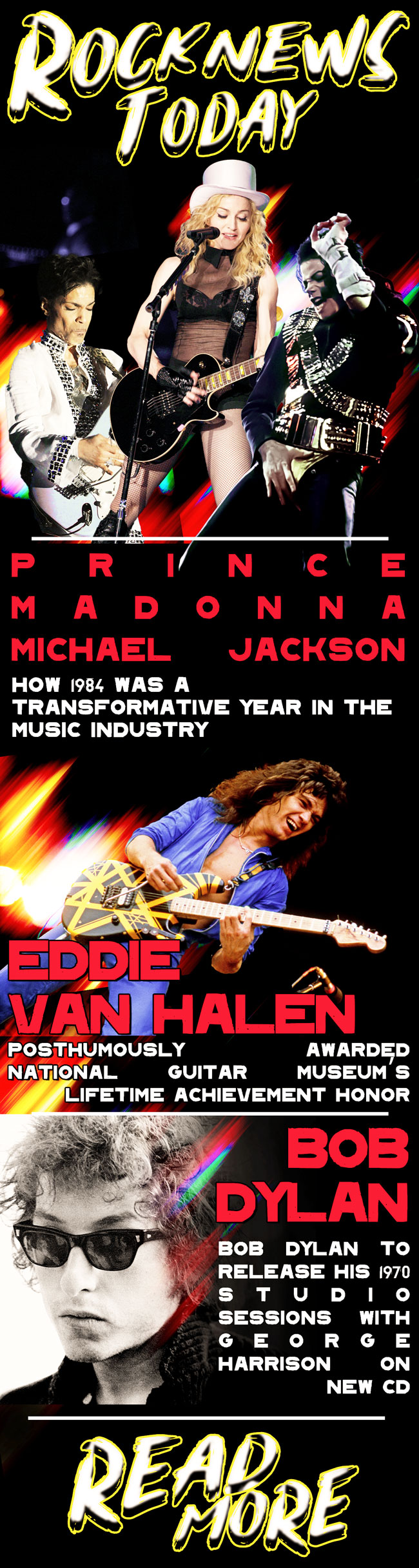
Bob Dylan’s 1970 studio sessions will see the light of day on February 26 with the official Sony/Legacy release of Bob Dylan-1970, the latest in the singer’s Copyright Collection series. The 3-CD set captures music recorded in 1970 for Self Portrait, New Morning and more, including nine tracks recorded with George Harrison on May 1 of that year.
In addition to working on original songs, the sessions feature Dylan and his rotating team, including Charlie Daniels, David Bromberg, and Al Kooper, working on covers by folk contemporaries Tom Paxton, Buffy St. Marie, and ‘50s classics by Carl Perkins, Johnny Cash and the Everly Brothers.
The songs were released in a limited quantity (reportedly 100 total) through UK retailer Badlands on December 4 to preserve the copyright integrity of the material. By doing so, Sony Music and Dylan prevent bootleggers and anyone with access to the recordings to release the material on their own without copyright infringement.
Since 2012, Dylan has annually released nearly the entirety of his unreleased recording vault from 1962 through 1970 via the Copyright Collection series.
Harrison certainly enjoyed the studio time spent with Dylan, as he wound up recording and releasing his own version of “If Not For You” on his All Things Must Pass album later that year.
Credits: BY ROBERT DYE / American Songwriter Magazine
Eddie Van Halen Posthumously Awarded National Guitar Museum’s Lifetime Achievement Honor
-->
The accolades are plenty for guitar great Eddie Van Halen, but there's one more to add to his legacy as the National Guitar Museum has named Van Halen as their Lifetime Achievement Award winner for 2020.
Every year for more than a decade, the museum has saluted a living guitarist who has contributed significantly to the legacy of the guitar. The guidelines state that the person must have been a performing or recording artist whose talents had an effect on guitar playing—and whose career inspired and influenced other guitar players.
In the museum's announcement, they state: "This year, the year of the pandemic, has given us reason to make an exception to our annual presentation. For 2020, we are recognizing Eddie Van Halen as the recipient of our Lifetime Achievement Award. It is being awarded, for the first time, in memoriam."
They continue, "It is perhaps fitting that we don’t need to explain why Eddie is deserving of such an honor — everyone who has ever heard his guitar playing knows. Eddie certainly would have received this award at some point in the future, as it seemed that he still had a lifetime of guitar greatness to give."
They conclude, "Several of the people we’ve honored over the past decade have left us in the years since we presented them with the award. In this case, however, the sadness of Eddie Van Halen's passing is somehow harder to accept. Thanks, Eddie. We only wish we could deliver this in person."
Some of the past winners have included Roger McGuinn (2011), B.B. King (2012), Tony Iommi (2015), Glen Campbell (2016) and Bonnie Raitt (2017).
Eddie Van Halen died on Oct. 6 at the age of 65. His influence on guitar playing is immense and his credits lengthy. Van Halen were inducted into the Rock and Roll Hall of Fame in 2007.
Michael Jackson, Prince, Madonna: How 1984 Was A Transformative Year In The Music Industry
-->
If there was a year during the 1980s that represented the apex of music and pop culture, it would have been easily 1984. That particular year saw a number of major artists—most notably Prince (Purple Rain), Madonna (Like a Virgin) and Bruce Springsteen (Born in the U.S.A.)—put out era-defining, blockbuster albums. And Michael Jackson's Thriller still dominated the album charts in 1984, even though it was released about two years earlier. But it wasn't just music that was thriving in 1984—such things as films (Ghostbusters, Beverly Hills Cop, Footloose) and technology (the advent of the personal computer, the compact disc, and the VCR) benefitted as well.
1984's musical and cultural highlights form the basis of author Michaelangelo Matos' newly published book Can't Slow Down. For the 1980s fan in mind, this voluminous survey chronicles the entire year through the lens of unique music-related events and moments: from the Second British Invasion of America and the 1984 Grammy Awards; through the New Music Seminar and the inaugural MTV Video Music Awards; to the behind-the-scenes anecdotes of the Band Aid and USA for Africa charity singles. In between are stories about the key artists who achieved success in the genres of rock, pop, alt-rock, metal, hip-hop, country and jazz—weaved in with the political, economic, and cultural climate of in 1984.
According to Matos, who wrote 2015's The Underground Is Massive, the idea for a music and cultural history book spotlighting 1984 began over 10 years ago. “I always really liked books about years, not just music books,” he explains. “One of my favorite books is Andreas Killen's 1973 Nervous Breakdown. I read that back-to-back with Ladies and Gentlemen the Bronx Is Burning, about 1977 in New York. I always thought of [Can’t Slow Down] as in that lineage.”
“The idea for me was I want to explain it in a way that you didn't have to already know,” Matos also says. “I was going through the material and the research, and being like: 'Why doesn't anybody know this? This is incredible.' And there were loads of that stuff.”
One of the main themes from Can't Slow Down is crossover—about established artists who recorded music around this period that appealed to a bigger and broader audience, such as in the case of Jackson, Prince and Springsteen. “You have a lot of music being made in this mid '80s period that is attempting very strongly to reach beyond its own boundaries and formats on radio. I think why that moment in music history feels relevant now because it did that first. Now nobody thinks about genre boundaries and limiting themselves.” Another subject touched in Can't Slow Down is the shift in fortunes of the British pop acts going into 1984. The year before, America saw a flood of them such as Culture Club, Duran Duran and Eurythmics finding success on the Billboard charts and MTV. Now these stars were being challenged by their American counterparts who co-opted their photogenic personalities and New Wave sound.
“It's already receding from where it had been half a year earlier,” explains Matos. “In 1983, it was constantly British. Then by the beginning of ‘84, it dropped off by about a third. A lot of that music was loathed by American music writers. When you look at The Village Voice poll from ‘83, it's all this roots rock [X, Blasters, Richard Thompson, Los Lobos]. The critics' poll was always geared towards that. The Second British Invasion simply angered and offended those kinds of critics, and there was really evil, mean dumb s*** being written about them.
“I think some of that [British New Pop] music is really ill-advised. But I also gained a real newfound respect for Duran Duran, especially. Those guys mean it. They had a mission and accomplished it. “Hungry Like the Wolf” is a great record—you have to be on Mars not to know that. What you get out of [Duran Duran bassist] John Taylor's book [In the Pleasure Groove] is how much he loves what he does and how grateful he is to have his fans. That band likes their fans.”
Credits: David Chiu – Forbes Magazine




© All Rights Reserved | Joe Bonamassa® is a registered trademark of J&R Adventures, LLC in the United States and other countries | Shop | Privacy Policy | Contact | Subscribe to Joe's Newsletter